Pages

Wednesday, March 7, 2012

Wrapping Up Third Quarter

Unfortunately, I have acquired the plague.  (I am sure it is snowing pollen this week.)  I left after lunch and your children were in the very capable hands of Mrs. Giacomo.

At the start of our day, I showed the students the steps of taking their two dimensional animal pictures and turning them into a three dimensional mask.  Just a few students had time to build out their mask.  They will be ready to finish up their papier-mâché at the start of our next class.  The rest of the class will work on these same steps when we return from Spring Break on March 20th.


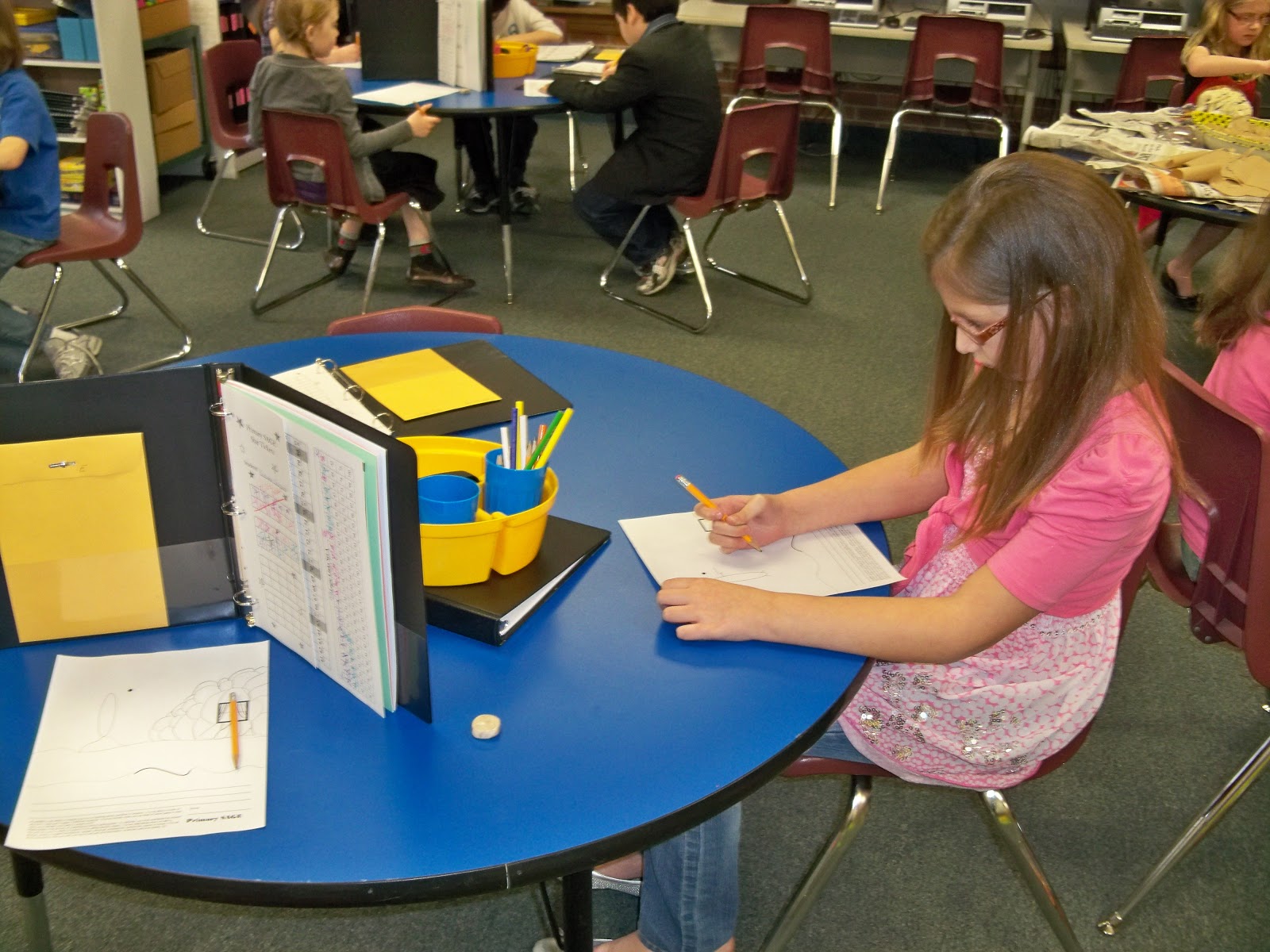
 In the morning, the students worked on a Creative Problem Solving Squiggle.  These exercises focus on and strengthen the students flexibility, originality and elaboration skills.  They did a great job.  Ask your child to share their squiggle with you.


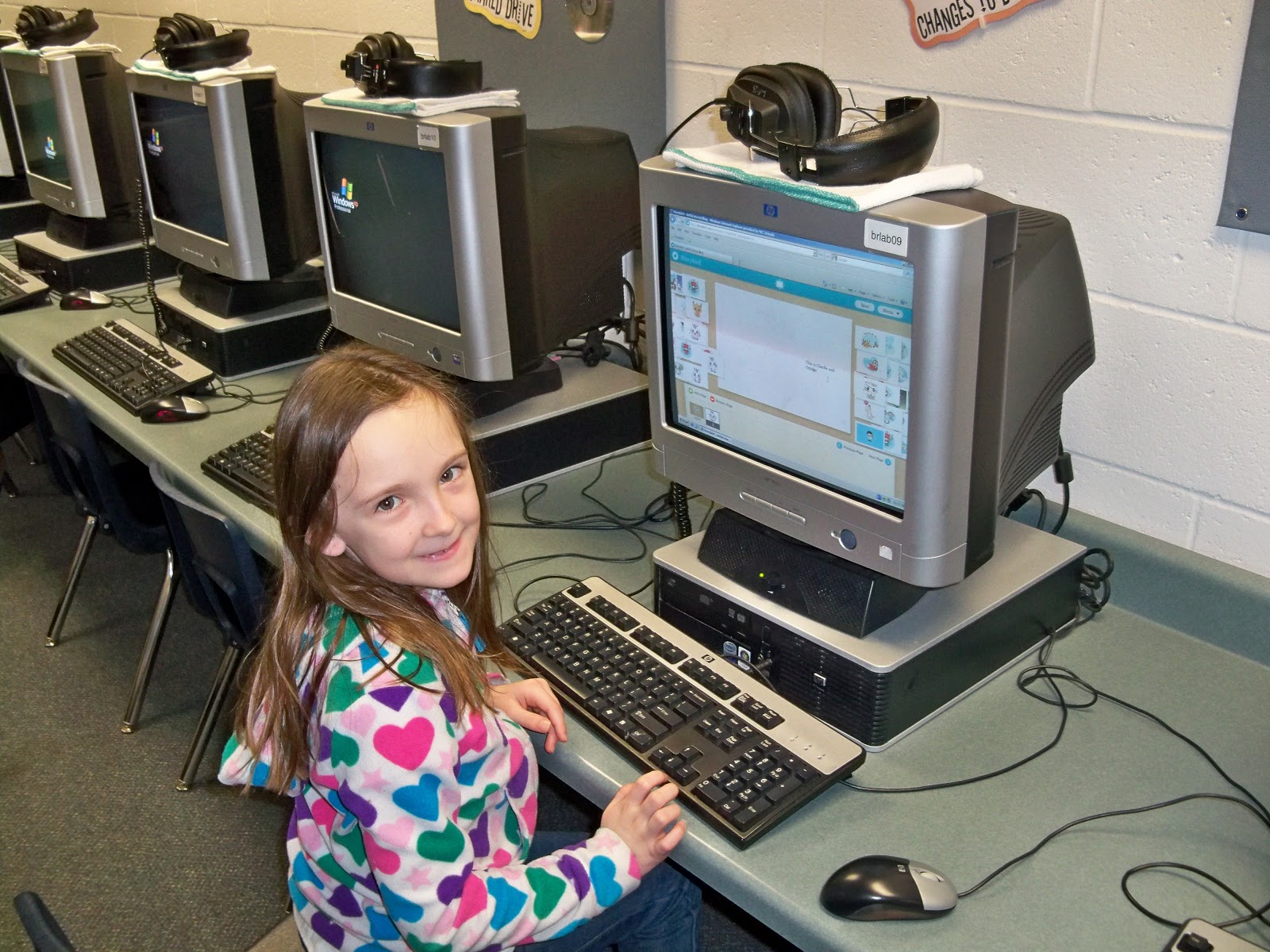
Over the past two weeks, I have introduced the students to another digital storytelling site, Kerpoof.  This week, the students were given an account under my teacher account.  They know their user login and their password.  The B Day students need to also remember their Class Account Code: E435.

After lunch and recess, the students worked on their logical thinking skills in the Logic Links program.  Next, they worked in their Exploratory centers.  Ask your child about the task they are completing.
Mrs. Giacomo had an affective discussion on classroom expectations, learning to challenge and push yourself, "fairness" in a differentiated lesson, when and how to correct a teacher. Spring is upon us and the combination of:
  • the weather changing
  • passing into new developmental stages
  • gained self-confidence
  • and a relaxed level of comfort with teachers and the classroom setting
doesn't always bring out the best in a 2nd grader.  Although this problem is not exclusive to gifted students, I do feel the asychronous nature of their development often sets them on a path of conflict with peers as well as adults. It is important for them understand appropriate social interaction with peers and adults so they are better able to successfully navigate their path.

"Giftedness is asynchronous development in which advanced cognitive abilities and heightened intensity combine to create inner experiences and awareness that are qualitatively different from the norm. This asynchrony increases with higher intellectual capacity. The uniqueness of the gifted renders them particularly vulnerable and requires modifications in parenting, teaching and counseling in order for them to develop optimally." The Columbus Group, 1991, cited by Martha Morelock, "Giftedness: The View from Within", in Understanding Our Gifted, January 1992   (A great article by the way...)

This time of year I hear more teacher complaints of students being verbally critical of other students and even their teacher/s, becoming lazier about doing quality work, and walking a fine line with regards to respect as they challenge a teacher and/or parents' requests. These life skills are difficult for many adults but I think it is important to have discussions so they can begin to understand and hopefully make the wise choices.  And so the conversations continue....

The students ended their day with Senora Gates.  Today they played Bingo with Spanish numbers and colors.

Tuesday, February 28, 2012

Our Animal Research Is Complete-- Let the Projects Begin!

What is it Mark Twain said?  "The reports of my death have been greatly exaggerated"-- or something to that effect.  Anyway, sorry for my blogging silence, I have been busy raising my teenagers.  LOL

The Reader's Digest Condensed version of the past few weeks....
  • The students (as of today) have all completed their research packet.  They are happy to have made it over this hurdle.
  • In almost every case, the students had some information that conflicted between their sources.  It gave us opportunities for conversations about valid sources and the importance of using current sources.
  • They have greatly expanded their vocabulary and understanding of their endangered animal and the threats that impact its survival.
  • In Storybird, the students continue to work on developing their collaboration skills as they write stories with their peers.


The students also selected and began their first project from their animal research.  Some students are creating a papier mache' mask of their animal while others have chosen to make an animal habitat diorama.  Today, the students making a mask completed the first layer of papier mache'.  I have asked the students to avoid wearing good clothes to SAGE over the next few weeks.  I have plenty of aprons, but our projects can be pretty messy.
    Last week, the students had a wonderful opportunity to learn about endangered animals first hand.  Staff from the Kansas City Zoo presented their program, Journey to Survival, an interactive program designed to expand each student’s knowledge of endangered animals and what the students can do to aid in the survival of animals around the world. 


    From Australia, we were introduced to the blue-tongued skink.  We learned how the natural balance can be disrupted when a non-native species is introduced into a habitat.  This occurred when rabbits were brought over on the settlement ships from England.  Without predators, their population exploded causing a competition for food with other native animals.  To "fix" this man-made problem, man imported foxes from England as they were the main predator for rabbits back in England.  Once there, however, the fox discovered the bilby, a slower moving marsupial that made for an easy lunch.  As the result of this man-made tragedy, the bilby is critically endangered.

    Next, the students learned about the struggles of the black rhino on the brink of extinction.  Poachers hunt for and kill rhinos to use their horn in medicines some believe will make them stronger.
    From the Amazon Rainforest, we met the double yellowed-headed parrot.  We learned about the destruction of its habitat and the illegal smuggling of these birds for the pet trade.


    Finally, from the United States, we learned how even domesticated animals can become endangered.  To the surprise of the zoo staff and pleasure of the students, the hen decided to lay an egg in our classroom!  Ask your child to tell you a little about the Polish hen and the other animals they brought to our class.


    Today I introduced the students to another digital storytelling site, Kerpoof.  This free site is a Disney created website where students can make pictures, storybooks and even animated videos.  It is very user friendly, engaging and inspires creativity in children as they tell their stories.  Turn your child loose on this site and they will use their imagination and writing skills to create original stories and projects.

    They ended their day with our Spanish lesson and by working on their logical thinking skills in the Logic Links program.


    Saturday, January 28, 2012

    Applying Our Creative & Critical Thinking Skills to Our Writing

    The students started their day with an introduction to a new, web based, digital storytelling application, Storybird.   Storybird uses a broad selection of art work to inspire you to write a story.  Each child was assigned a username and password today.  One of the great things about this application is students are able to continue their work from home, at their home school or here in SAGE.  All they have to do is login to the website.  They can even collaborate on a book with their classmates.  Another great feature of the site is you have the ability to print copies of your child's story on your home printer, share their stories through email, embed them in websites or blogs and even order hard or paperback copies of your child's book.  


    The students spent some time exploring the available art work.  When they found an artist's work that inspired a story idea, they began creating their book.  Have your child login and share their story with you. 

    Below is the book Theo completed.


    The Weird Knight on StorybirdIn the afternoon, the students continued their animal research.  
    This week, they learned strategies for organizing information.  As the boys and girls read their animal articles, they used a color coded key to highlight it for specific content.  This will help them next week when they begin recording notes in their animal research booklet.


    They did a nice job on this step and seem ready to begin the note taking process.Have a great weekend!

    Thursday, January 26, 2012

    Finding the Questions to Drive Our Research

    Our day started by completing a pretest KWL on the animal each child is about to research.  The students listed facts they Knew about their animal and wrote questions about What they wanted to learn about it.   At the end our individual research unit, they will record what they Learned about the animal.   

    We reviewed how to access the district's research data base.  We used the Smart Board to explore Searchasaurus, World Book Online, Kid's Search and Kids Info Bits. The students succeeded in printing a Searchasaurus article and scanned other brief articles in the online applications.  Finally, we were able to check off our progress on our research, task list.

    We discussed the scope of our research and the types of sources we will be learning to use and cite.  We also looked over the research packet we will be using to keep our research organized.   

    This is a new twist on the animal unit I have taught for many years.  I wanted the students to select an endangered animal so we could find relevant, real world problems to explore and, to the best of our ability, do what we can to bring about a solution.  I also wanted to involve them in the planning process.  By helping to define the direction of their research and the potential projects and products they will complete, they will be more invested, engaged and motivated throughout their research.  The students brainstormed ways they can individually, in small groups or as a class help endangered animals.  I guess I was a little surprised.  All three 2nd grade classes approached the problems in very similar ways.  It was a very interesting, and for me, enlightening discussion.  

    We (both teachers and parents) have taught our children to problem solve and think the way we have always done--even the way our parents, their grandparents, have done.  Their ideas began with: 
    • "We can make posters to teach others about endangered animals and hang them up around our school and on (telephone) poles in our neighborhood."
    • "We can take the endangered animals out of the forest so they aren't in danger any more."
    • "We can make flyers and hand them out to people at our schools and at our open house."
    • "We can send letters to our government and President and tell them to protect the animals."
    • One student even suggested, "We have a fund raiser so we can all fly to Washington to meet with the President or government officials to convince them to save endangered animals."
    • "We can make phone calls or send letters to scientists working with the animals to ask them questions."
    • "We can go to the radio station and be interviewed about our research."
    • "We can make a video and have it shown on TV."
    • "We can write a play about protecting the animals and perform it at our Open House."
    • "We can make a wax museum where we share what we learn with the people that come to Open House."
    I was really dumbfounded!  I know they are young and have limited life experiences, but they are all "tech" experienced.  They are our digital natives.  They are unafraid of the Internet.  They text, email and interact with others on the computer as if it is completely natural to them, yet in all three classes, the first 8-10 suggestions included no technology beyond a telephone.  I teased them and told them they were thinking like their great grandparents did when they were eight years old!  It still took a little prodding and a few example suggestions before they opened up and started thinking of 21 Century skills.  Once they were rolling, they suggested:
    • sending email, texting, video conferencing, and tweeting
    • making a video and putting it (embedding it) on our blog
    • making a podcast news show to add to our blog
    • making a video about saving the animals and uploading it to You Tube
    • making a website to teach others about endangered animals
    • blogging about our research
    • use digital images to share information about the animals on our blog or on website
    • making a website to share our research and digital posters
    • doing an online auction as a fund raiser
    • making an electronic newspaper
    Yeah!  Maybe they will be ready for the demands they will face as adults in a technology driven world after all.  Research supports my belief that our children must learn to think differently; must learn to collaborate from a distance as well as face to face.  They need to have a broad knowledge of the digital tools available to them and be able to quickly assimilate and evaluate Internet based applications.  We know the Internet and the digital world will change faster than we can ever master the skills.  Our children will be prepared if we can teach them to think.  

    Alvin Toffler, author of Future Shock says, 'We need to teach students to learn how to learn, learn how to unlearn and learn how to relearn, because that's the real skill."  Loosely quoting Psychologist Herbert Gerjuoy, Toffler said, "Tomorrow's illiterate will not be the man who can't read; he will be the man who has not learned how to learn."  That is our job.

    Fortunately, their ideas raised even more questions and this will be the starting point for their research.  The actual projects they will complete will be determined when they have learned more about their topic.

    The students were able to work at their exploratory areas.  They are finishing projects and having fun along the way!


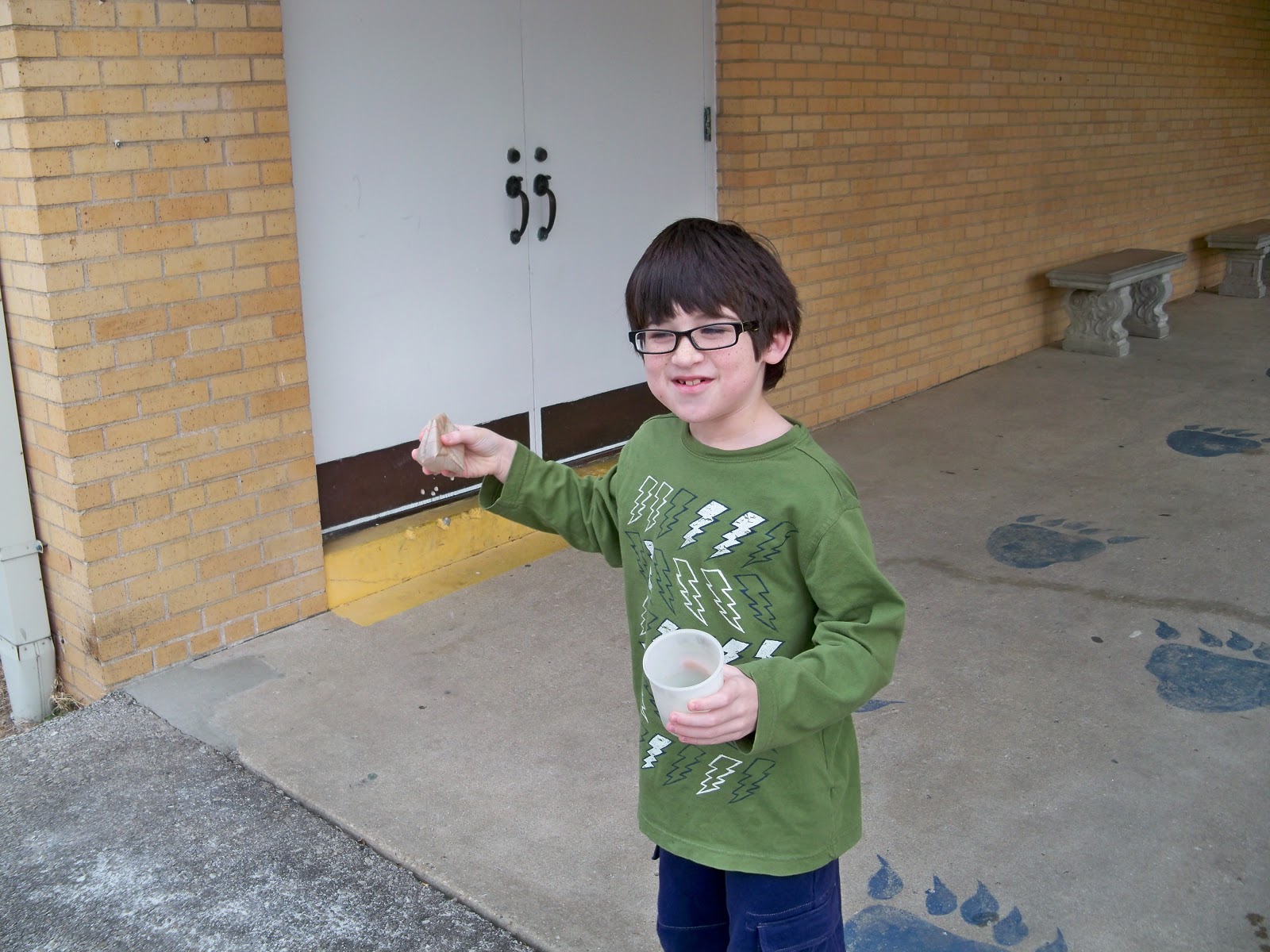
    This student even made a water balloon out of Origami paper.  We just couldn't pass up on the opportunity to fill it and "wing it" across the parking lot out front.


    Senora Gates ended our day with Spanish.


    Another busy, but satisfying day!

    Friday, January 13, 2012

    Wow! Three New Students in One Day!

    Today we welcomed Duaa, Elsie and Patty.  They were enthusiastic and maybe a bit nervous at the start of our day.  By the end, they seemed to have settled right in to our group.  I know they will be great additions to our class!

    After getting to know our new friends, we reviewed on the white board how to locate our endangered animals site, www.arkive.org and how to search for a specific species.  Today, was our "highly anticipated" day to choose our research animal.  After one final look at our endangered list, the students settled on their choices.  This group is studying a variety of species including yellow crested cockatoo, chimpanzee, Asian buffalo, yellow headed parrot, Bengal tiger and several others.  Ask you child about their choice and what inspired their decision.

    The students were introduced to/reviewed how to search for a library book by author, title, subject or series in our district online catalog.  Because our species are so specific, many students had to refine their search to include all or our district's elementary school libraries.  It is difficult skill to learn to broaden a search and it requires the students to be flexible in their thinking and persistent in their search.  Hopefully the books we are ordering will be helpful in our research.  Next week, we will go to the district online resources to find a Searchasaurus article on our animal.  It will be one of our main resources.

    I am not concerned about finding sufficient information.  The animals I offered as choices were ones for which I know we have information.  As this is their very first, in depth research project, I want them to be challenged, but I also want them to be successful.  It is my goal for each student to have a bibliography that includes at least one book, traditional encyclopedia, online article, online encyclopedia and possibly a magazine article.  This will give them the opportunity to learn to cite a variety of sources too.

    Next week, for most of the students is still pretty fun.  We will be focused on gathering sources.  The following two to three SAGE days will be pretty challenging and fairly taxing.  My usual opening statement for the day will be, "You need to be prepared to work really hard today.  You are going to feel confusion and frustration and you will get tired of writing, but I promise you, if you dig in and persevere through the research portion of our study, I will make it worth your while with our projects."  Very few adults, let alone students, enjoy the note-taking, knowledge-gathering portion of a research study.  In general, these will be the whiniest weeks in my classroom, (LOL) but at the same time, they will contain the work for which the students are the most proud.  With that pride comes confidence in their abilities and in himself/herself.  As you talk to your child after their SAGE day, ask them what they have learned about their animal, encourage them to persist in their note-taking and most importantly, praise them for their efforts.  One great outcome you will see is they sleep well after a long day of work!

    After lunch and recess, the students worked on their math problem solving skills in the TOPS Math program, (our individualized math problem solving program.)


    Next, I introduced the students to a visual perceptions game called SET.  In this game, they have to find sets of three cards where all of the cards attributes are either all the same or all different.  It is a very "tight thinking" activity.


    We ended our day with Spanish instruction by Senora Gates.  Today the students learned practiced their numbers from 1-40.


    I enjoyed our day and I hope your child did too!

    Friday, January 6, 2012

    Jumping into Second Semester

    It is nice to be back in class!  The students came in excited and energetic this morning.  It sounds like they had a fun winter break.  Today they were focused and hard working.

    We started our day sharing something we did over break to "feed our soul;" for me it was painting.  The kids shared about receiving special presents, enjoyed seeing cousins they don't get to see often and spent time with family and friends.  

    Next, we discussed the spectrum labels used to identify an animal species' status:

    • extinct
    • extinct in the wild
    • critically endangered
    • endangered
    • threatened
    • nearly threatened
    • vulnerable
    • least or lesser concern
    For the purposes of our research unit, the students will be choosing an animal that is endangered or critically endangered.  We are using www.arkive.org to determine an animal's status.  Several asked for the link so they can explore the animal lists and check on animals they are interested in studying.  They will make their final choice next week and begin gathering information on it.  (***As this is the first real research most of them have done, I want to avoid obscure animals and those on which little has been published.)


    The students were introduced to the North Kansas City Online Resources.  In the computer lab, they worked to cross-reference our list of endangered animals to be sure we have a Seachasaurus article available for each animal species.  The did a great job!

    After lunch the students worked in their individual Exploratory areas.  Ask your child about their progress.

    Next, we discussed the importance of goal setting, how to make a specific, relevant and reasonable goals, and what we can do to achieve our goals.  The students began this process by choosing an area of focus for a goal related to their SAGE work.  In the weeks ahead, we will write and refine their goals and begin tracking their progress.  Ask your child about his or her individual goal ideas.

    We ended our day with our Spanish instruction with Senora Gates.